


 Menu
Menu


Description
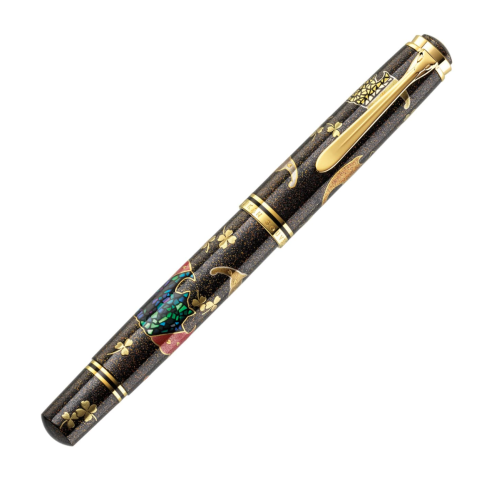
A fountain pen made of resin. 18 kt gold nib, engraved
The pen has a piston system for collecting ink, a combined piston. Screw-type fountain pen.
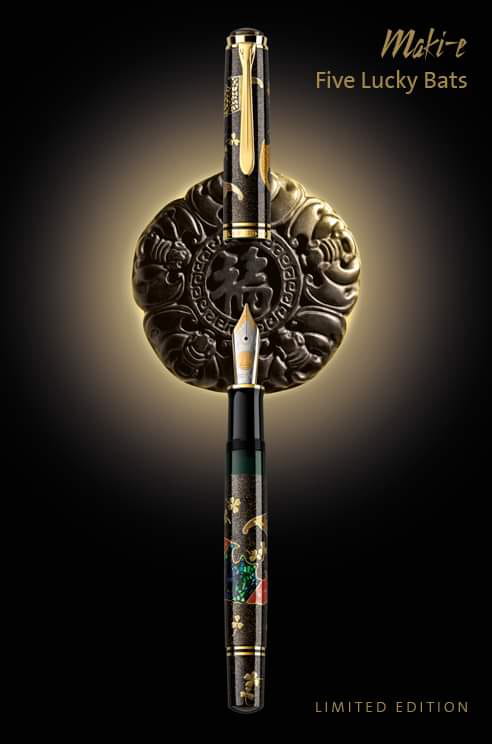
In China, the bat is considered a symbol of good luck because the pronunciation of the word "bat" is similar to the Chinese word that means "happiness is coming." The bat pattern is a happy pattern that brings five kinds of happiness: long life, wealth and respect, health and importance, virtue and grace, and death without worry and regret.
There were times when only noble people could wear clothes with a bat motif. Also in Japan, the bat is considered a symbol of good luck because the word "bat" is pronounced "komori" which can be spelled in Japanese as "much luck".
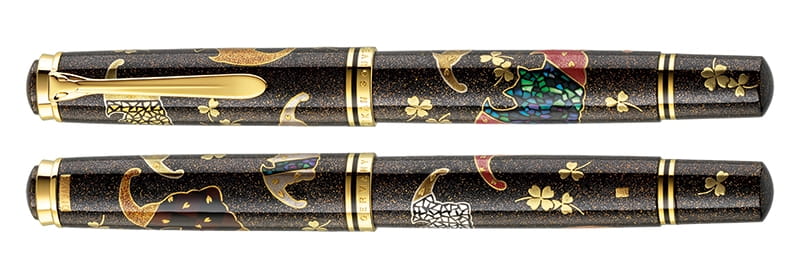
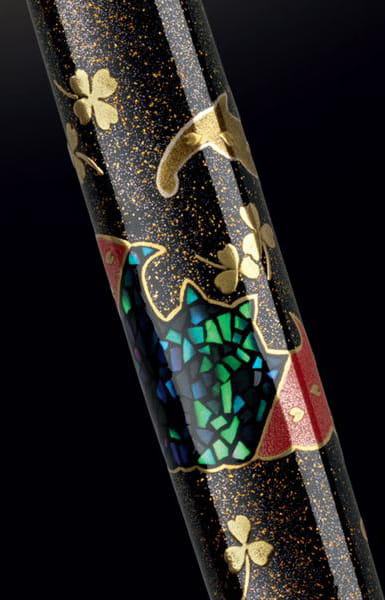
In Taka-Maki-e there are five bats drawn on a fountain pen using techniques such as raden and kirigane. An additional symbol of luck is the five painted golden four-leaf clovers that complete the feather motif.
The Taga Maki-e technique has been evolving for over a thousand years. Decorations using this technique can be admired, among others in the palaces of emperors on musical instruments and in ancient temples. Kaga Maki-e is a combination of beauty and luxury expressed in a way typical of Japanese culture: full of simplicity and sophistication. The pens in this series were made in Kyoto and reflect the ancient roots of Maki-e art.
Limited edition 123 pieces / world.